
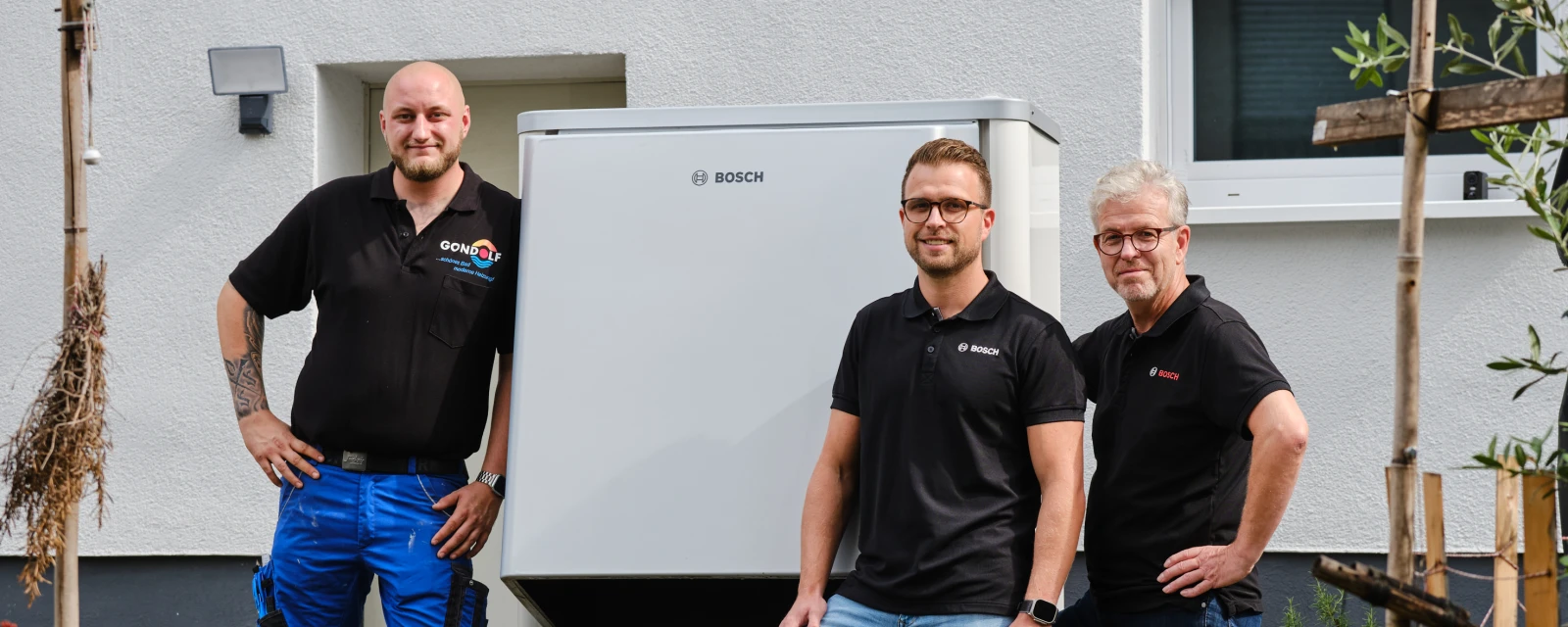
Compact basement, quiet backyard
Heat pump installations are possible in inner-city apartment buildings. A project in Frankfurt-Griesheim shows how it's done.
Installing heat pumps in inner-city apartment buildings comes with specific challenges. Especially in older buildings, where space is limited, the installation of a building-specific heating system can be challenging. An example from Hesse shows how, even under these conditions, a heating solution that combines an air-to-water heat pump with a gas condensing boiler and is tailored to the requirements of the building can be implemented. An innovative bivalent hybrid heating system was installed in a 1913 apartment building on Waldschulstraße in Frankfurt. It combines an air-to-water heat pump with a gas condensing boiler. To ensure that such a system operates in accordance with the intended operating requirements, it was planned for the building in close collaboration with the owner and installer, with all components precisely coordinated.
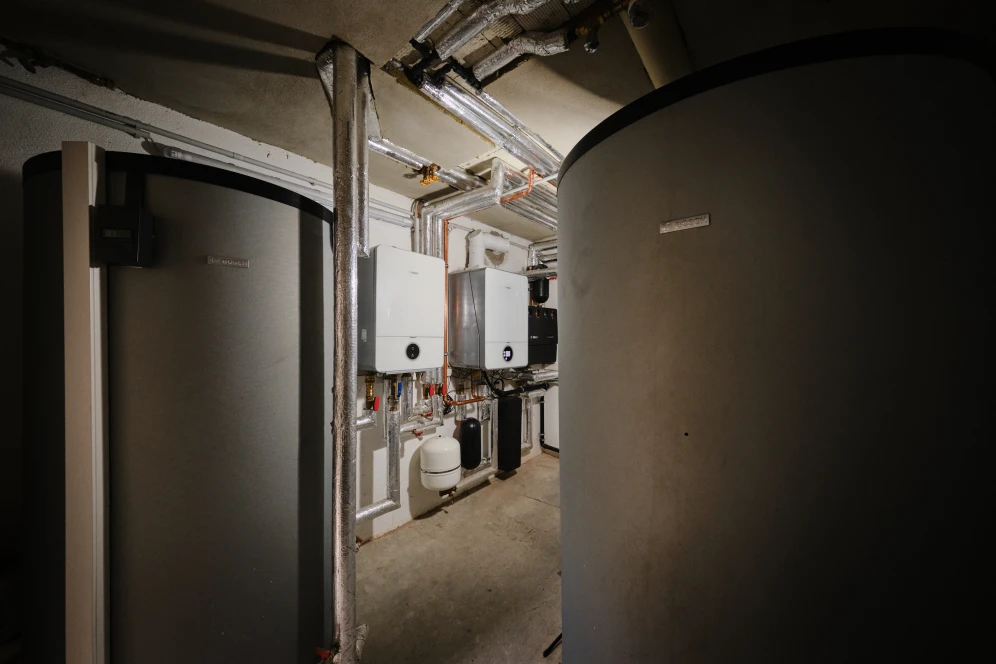
Challenge: Perimeter block development and narrow utility rooms
Frankfurt-Griesheim, a typical residential area shaped by late 19th-century industrial expansion, is densely built in most parts. Perimeter block development, narrow utility rooms, and small inner courtyards raise important questions about heating technology and noise control during renovation projects. “We were faced with the challenge of a very low basement ceiling,” explains Marcel Meilinger from Bosch Home Comfort Deutschland. “That’s why we selected smaller buffer tanks and compact indoor units that could be installed in the cramped heating room without having to break through any walls. Another requirement was compliance with TA-Lärm (German noise protection regulation) In urban areas, the placement of heat pump outdoor units must be planned with great care, as night-time noise limits are a top priority for both regulators and residents. For this reason, we equipped the heat pump with two additional sound hoods tdesigned to achieve the specified sound level for the project.”
The Bosch hybrid system: Combining flexibility and efficiency
At the heart of the installation is a hybrid system consisting of an air-to-water heat pump and a gas condensing boiler. Once the obligatory hydraulic balancing is complete, this combination allows for demand-oriented heat supply, even on particularly cold days. For this purpose, all thermostats of the existing radiators in the apartments were replaced and upgraded for a lower heating temperature of 45 degrees. This allows the heat pump to cover most of the heat supply on its own. The gas condensing boiler only starts up and covers the additional temperature requirement during peak demand situations, for example, at very low outside temperatures.
“Our hybrid system is particularly flexible,” says Jens Mischke, Head of Housing Industry and Energy Suppliers at Bosch Home Comfort Group. “The heat pump is already used for the building’s heat supply and is supplemented by a gas condensing boiler.” “In the future, the existing heat pump could be supplemented by a second unit. This would allow the system to be expanded into a monoenergetic configuration.” This Bosch solution allows owners to integrate the step-by-step conversion of their heating system into their investment planning.
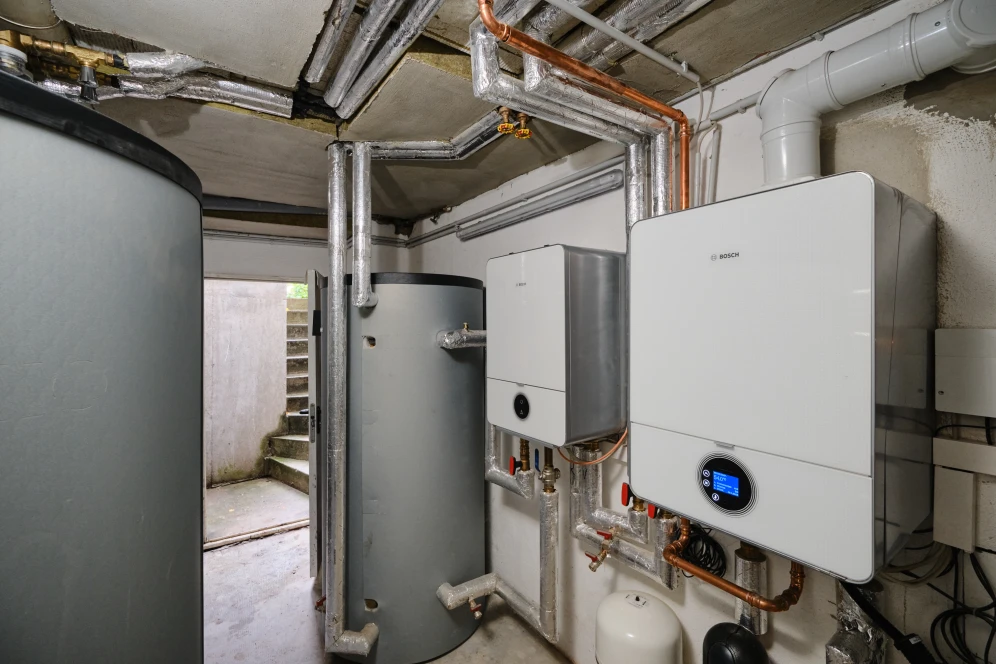
Fresh water station for hygienic and safe hot water
Water heating in apartment buildings often carries the risk of legionella formation if water stands in pipes and storage tanks for long periods. To prevent this, Bosch is using a domestic hot water station in this project. This system uses a continuous flow principle toThis system uses a continuous flow principle to heat drinking water on demand, thereby avoiding stagnation in storage tanks - an advantage for hygiene and demand-oriented hot water supply. “The domestic hot water station is easy to install and provides a hygienic and space-saving way to produce hot water,” emphasizes Fabian Gegner, master craftsman at the installation company Gondolf from Frankfurt. "The continuous flow principle is especially beneficial in apartment buildings, where hot water requirements vary greatly. It is particularly maintenance-friendly and cost-efficient."
Easy installation and high service convenience
Another strength of the Bosch system lies in its easy installation and compact components. “The planning phase was well-structured, ensuring a flawless and timely installation of the system.,” explains Fabian Gegner. “The buffer storage tanks are very compact and were easy to install in the very small boiler room. That was a huge relief.” Space was also a decisive factor for placing the outdoor unit. “We had to make sure that it is positioned in a way that would not disturb the neighbours. Bosch found a solution here with a powerful heat pump that is easy to transport and can be installed on site using short piping runs,” Gegner adds.
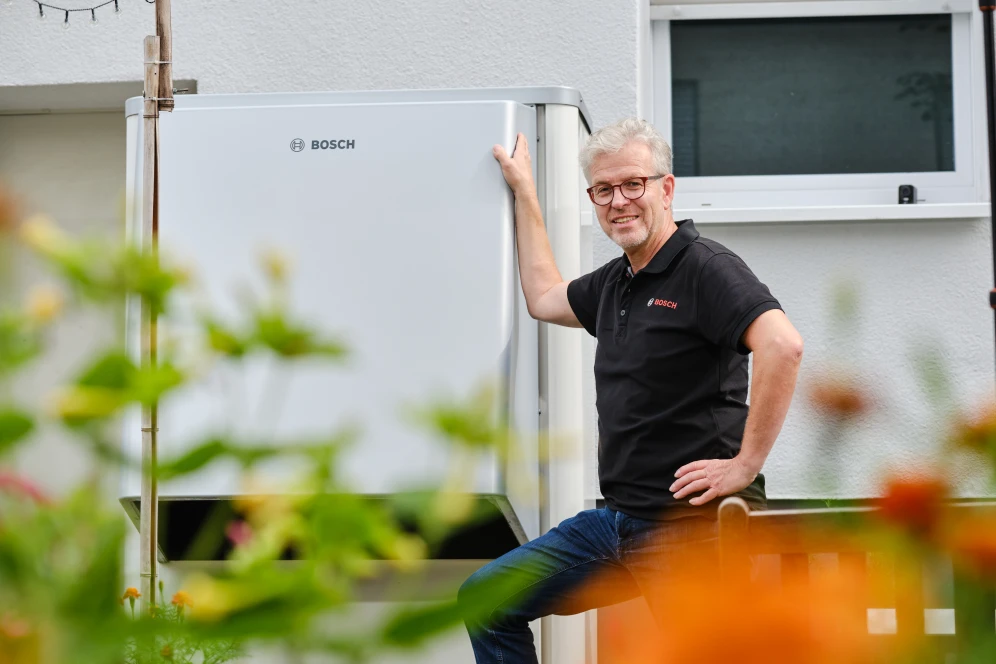
Flexible planning for inner-city buildings
This example from Frankfurt shows that a heat supply with a defined share of renewable energy is also possible in existing buildings in inner-city locations. “This installation demonstrates that, with forward-looking planning, a heat pump can also be integrated into existing heating systems in confined urban spaces and can contribute to the step-by-step conversion of the heat supply,” says Jens Mischke.