
Bosch Home Comfort Group 2023
Growth drivers are heat pumps and heat pump hybrids
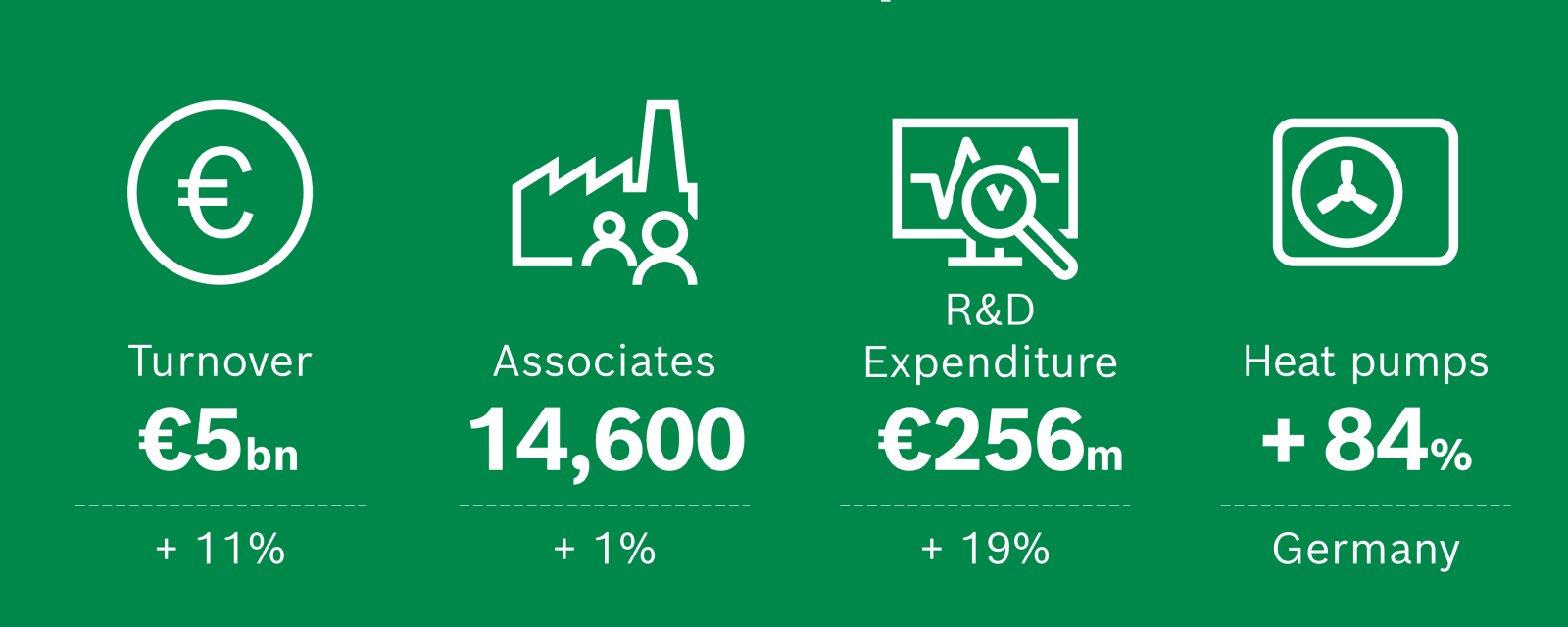
- Bosch Home Comfort Group achieved a turnover of five billion euros in the 2023 financial year.
- Sales of heat pumps in Germany increase by 84 percent, business with heat pump hybrids by 46 percent.
- One billion euros to be invested in European development and production network by 2030.
- R&D expenditure up 19 percent to 256 million euros.
The Bosch Home Comfort Group achieved sales of five billion euros in the 2023 financial year. The company thus grew nominally by eleven percent compared to the previous year; adjusted for exchange rate effects, sales rose by around 14 percent. Growth was driven by heat pumps and heat pump hybrid systems: In Germany, the heat pump business recorded sales growth of 84 percent, while sales of hybrid heating systems increased by 46 percent. Growth in both segments was therefore significantly higher than the market, which grew by 51% and 12% respectively. The Bosch Home Comfort Group has also expanded its market position in heating appliances with different technical properties, which can later be supplemented with a heat pump to create a hybrid system. "We were already operating in a volatile market environment last year. High interest rates and a low rate of new construction are also affecting the heating market," explains Brockmann.
The European picture is mixed: While markets with clearly defined subsidy programmes such as the Netherlands have seen significant growth in heat pumps and hybrid heat pump systems, other markets have seen a decline. However, the Bosch Home Comfort Group expects demand to stabilise and growth to return to normal in the medium term.Compared to 2022, the company increased its research and development expenditure by 19 percent to 256 million euros. At around 14,600, the headcount was slightly higher than in the previous year. “We look back on a successful financial year, which was influenced by political decisions. One thing is for certain: heat pumps and hybrid heat pump systems are key options for the further electrification of the heating supply. That is why we will continue to pursue our path toward electrification with great determination,” adds Brockmann.
Subsidy conditions ensure an increase in demand in the medium term
The Bosch Home Comfort Group expects the German market to get off to a slow start in the first half of 2024. The fact that subsidy conditions remained unclear for an extended period of time last year led to uncertainty among consumers and led to a decline in the number of applications for heat pump subsidies. “The subsidy conditions are now clear to consumers. We are cautiously optimistic that domestic demand for heat pumps and heat pump hybrids in Germany will increase again from mid-2024,” explains Jan Brockmann. For the further electrification of the heating supply in Germany’s building sector, heat pumps and heat pump hybrids must be affordable for households in terms of purchase and operating costs. “We still believe that the Gebäudeenergiegesetz (Building Energy Act) should be expanded to include additional solution options such as ventilation systems with heat recovery,” adds Brockmann. “Regardless of this, now is a good time to take advantage of the attractive subsidy programme and opt for a heat pump or heat pump hybrid.”
Bosch Home Comfort Group prepared for heat pump ramp-up
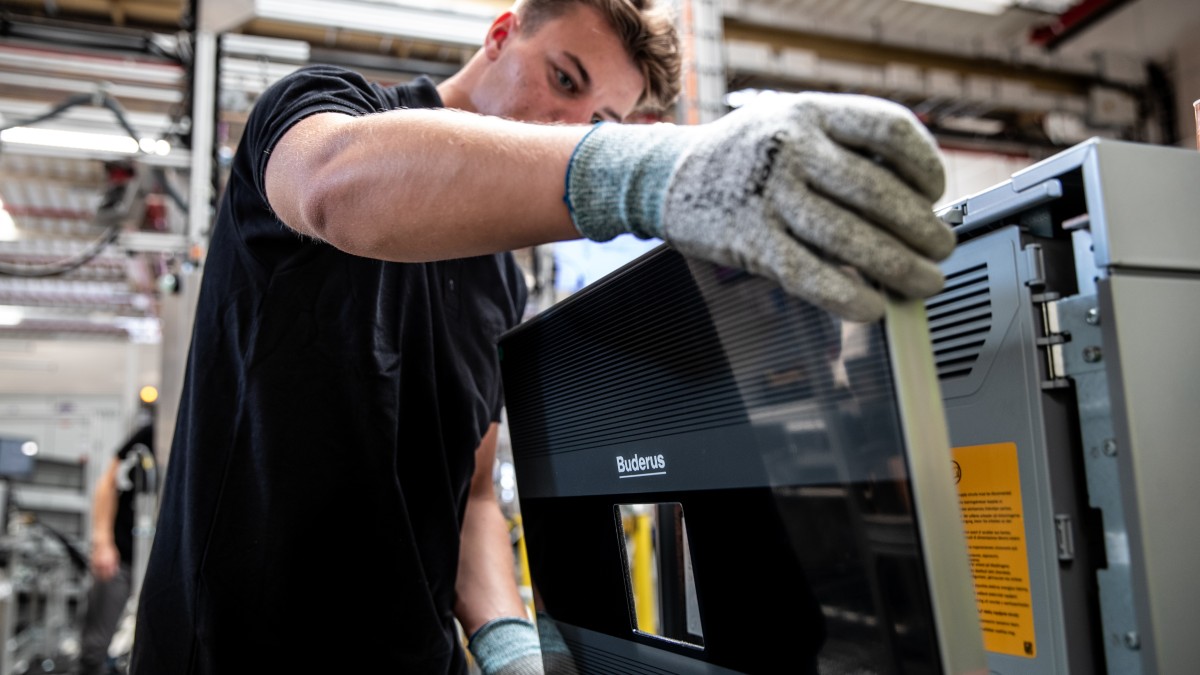
With the full effect of the Building Energy Act from 2026 / 2028, the company forecasts further development of electrification in the heating market. The Bosch Home Comfort Group is investing more than one billion euros in its European development and production network for heat pumps by 2030 to provide the necessary capacity. A major part of this investment, around 255 million euros, is to be spent on the construction of a new production site for heat pumps in Dobromierz in Lower Silesia by the end of 2027. 100 million euros will be invested in the expansion of the Aveiro site in Portugal by 2026. In Wernau, the company has set up a new laboratory with test benches for heat pumps, hybrid heat pump systems and ventilation systems. These strategic investments clearly reflect the Bosch Home Comfort Group’s commitment to the European market and underline its continued development of heat pump technology. “The Home Comfort Group has entered 2024 stronger than ever, with the aim of providing innovative heating, ventilation and air conditioning solutions and driving the full range of electrification solutions around the world,” says Jan Brockmann. At the CES in Las Vegas, Bosch presented a new air-to-air heat pump for outdoor temperatures down to minus 25 degrees Celsius, specially designed for the cold regions of North America. The Bosch cold climate heat pump meets the requirements of the U.S. Department of Energy and will now move from laboratory to field testing.
Electrification in residential neighbourhoods and existing buildings
In addition to heat pump solutions for new builds, the Bosch Home Comfort Group’s electrification portfolio also includes solutions for residential neighborhoods and existing buildings.
For example, cold local heating networks with brine-to-water heat pumps can be established in Germany and other countries. In the North Frisian municipality of Leck, the first phase of such a network is currently being built to supply 153 residential and functional buildings with heat and hot water. Each building is connected to a Bosch brine-to-water heat pump. A central collector field extracts heat from the ground, providing an energy supply for the neighborhood via a central collector field and brine-to-water heat pumps.
Starting in 2024, the Buderus brand will offer hybrid heat pump systems that also enable existing older apartment buildings in urban neighborhoods to meet the requirements of the German Building Energy Act with a combination of a heat pump and an additional condensing boiler. The heat pump takes on the main load of the supply, and the supplementary condensing boiler is only switched on during peak demand.
These hybrid systems can provide a heat supply for neighborhoods with up to 100 residential units.
In 2024, the Bosch brand will launch its first air-to-air heat pump, which can be used to heat and cool buildings. As it meets the requirements of the Federal Subsidy for Efficient Buildings (BEG), it is eligible for subsidies like any other Bosch heat pump.
Well-Being portfolio significantly expanded
The Bosch Home Comfort Group has significantly expanded its range of well-being products. From summer 2024, all air purifiers and mobile air conditioners will be controlled via the HomeCom Easy app, which is also used to control heat pumps.
Modern energy management systems provide electricity to consumers in the home. By distributing photovoltaic power intelligently and automatically, the electricity generated can be allocated to the consumers in the home.
New services for specialised companies accelerate the energy transition
The Bosch Home Comfort Group and its brands are supporting heating contractors in their daily work. Hands-on training courses teach heating contractors how to plan and install heat pumps and heat pump hybrid systems. In 2023 alone, more than 20,000 installers were trained in electrification seminars. To support the next generation, the brands also offer further training programs for teachers at vocational schools. According to the German Federal Statistical Office, the profession of HVAC system mechanic is one of the ten most popular apprenticeships.
The Buderus and Bosch brands offer a wide range of digital solutions, such as remote monitoring of heating systems, and various services to support work processes in the HVAC trade and give contractors more time for their core business - installing heating systems.
The Bosch brand’s new foundation service allows heating contractors to book the construction of foundations at the installation site of heat pump outdoor units as a service and outsource this non-specialist activity.
The Buderus brand is currently setting up a new photovoltaic installation service, which includes advice, planning of the individual photovoltaic system, and preparation of the complete offer, including installation.
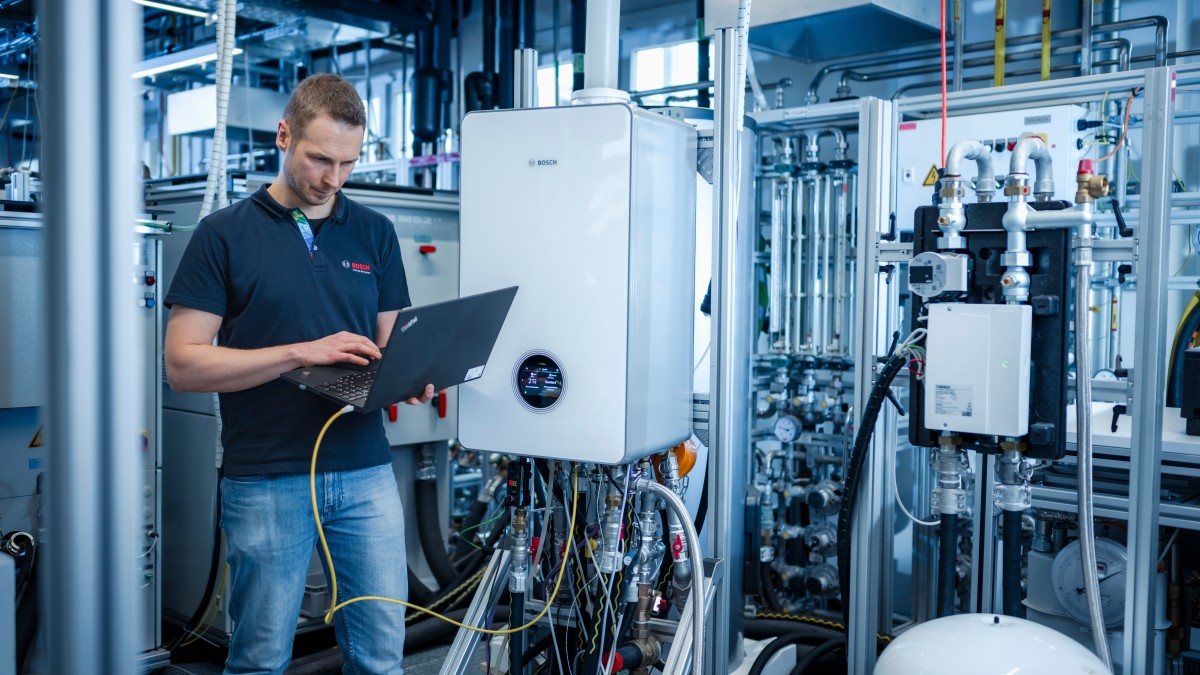
New laboratory with test benches in Wernau
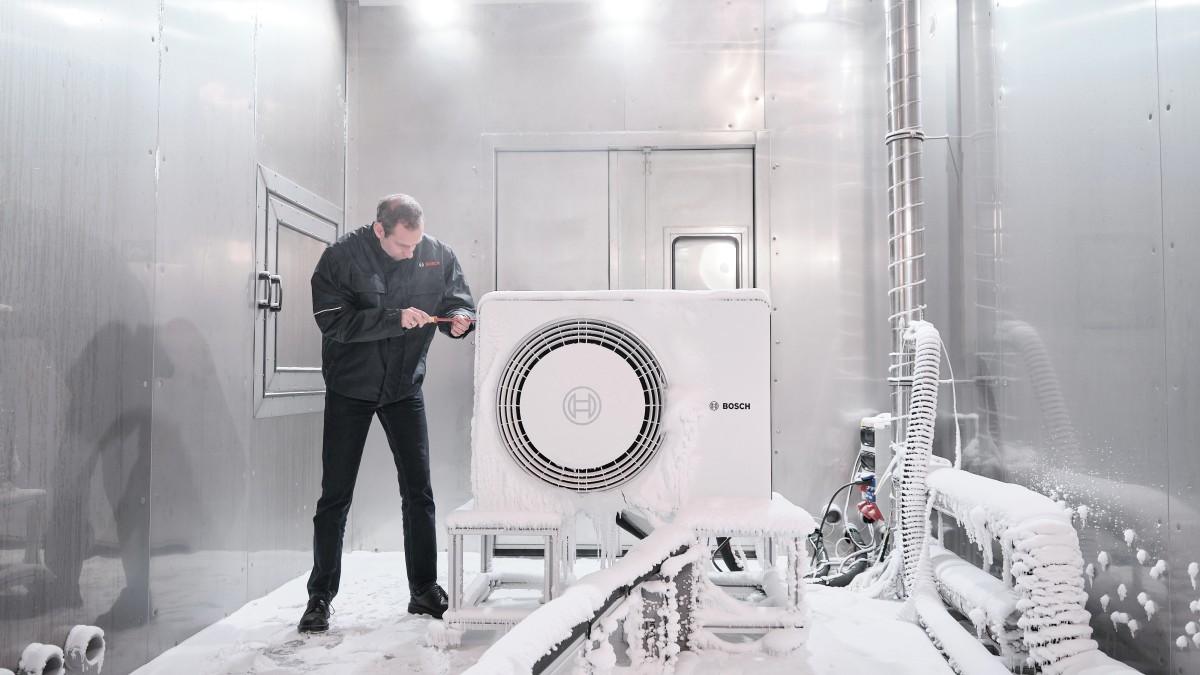
Research & Development Bosch Home Comfort Group
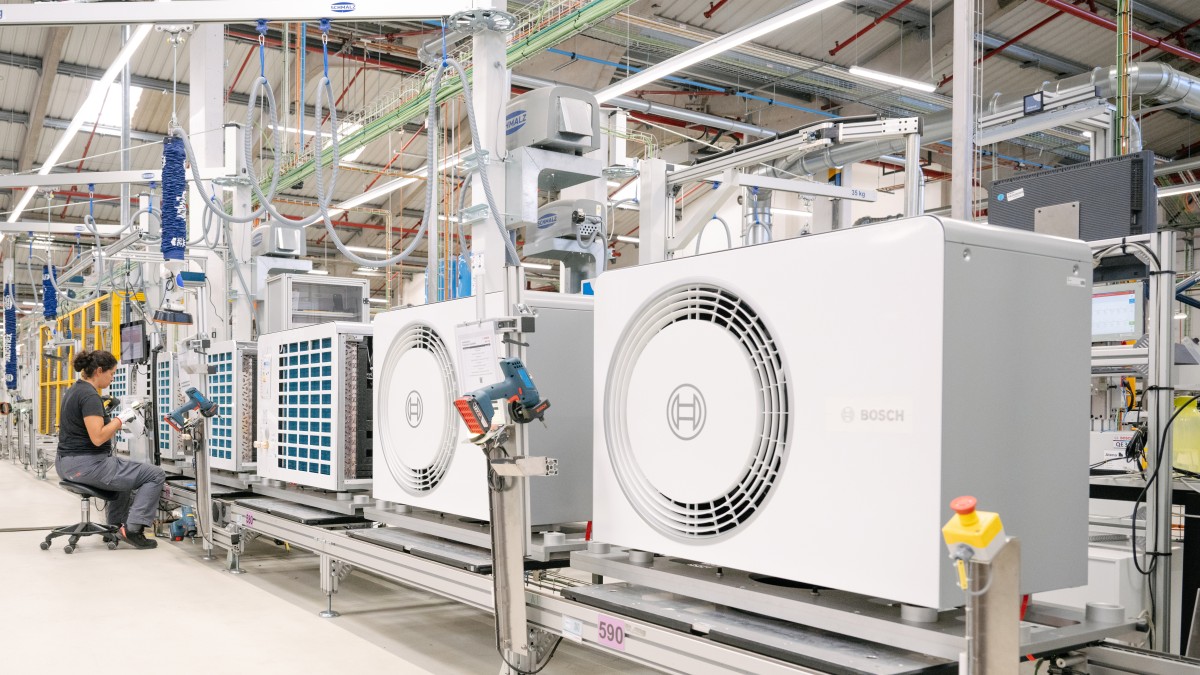
Heat pump production in Aveiro
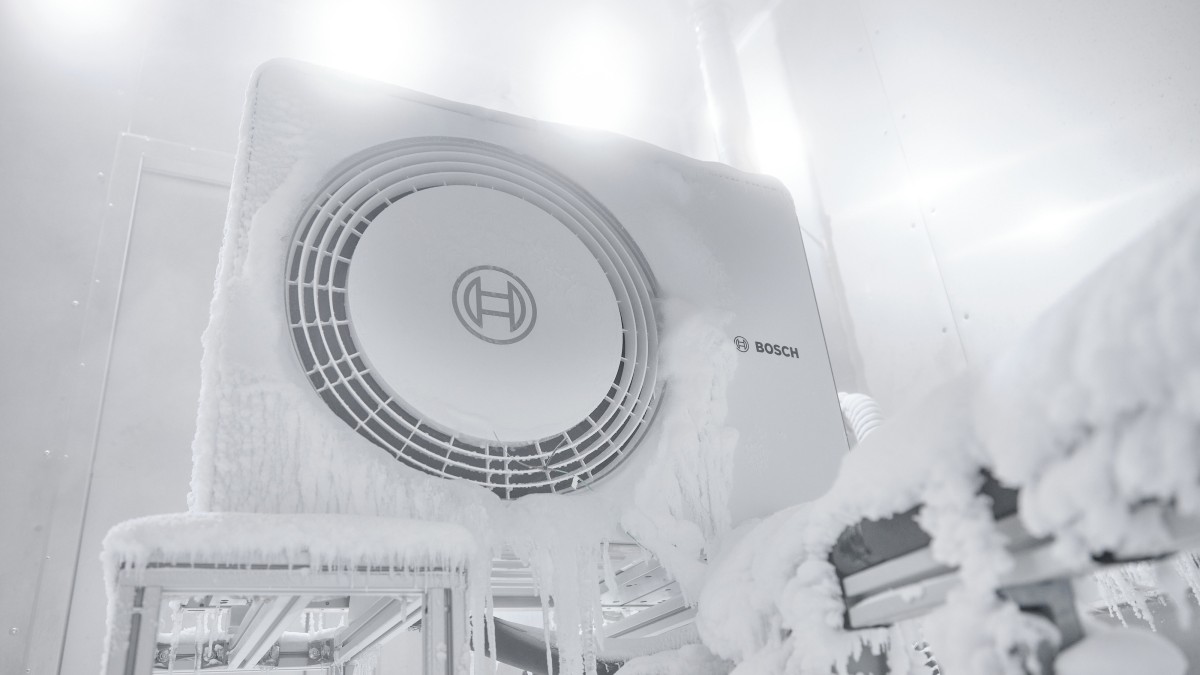
Research & Development Bosch Home Comfort Group
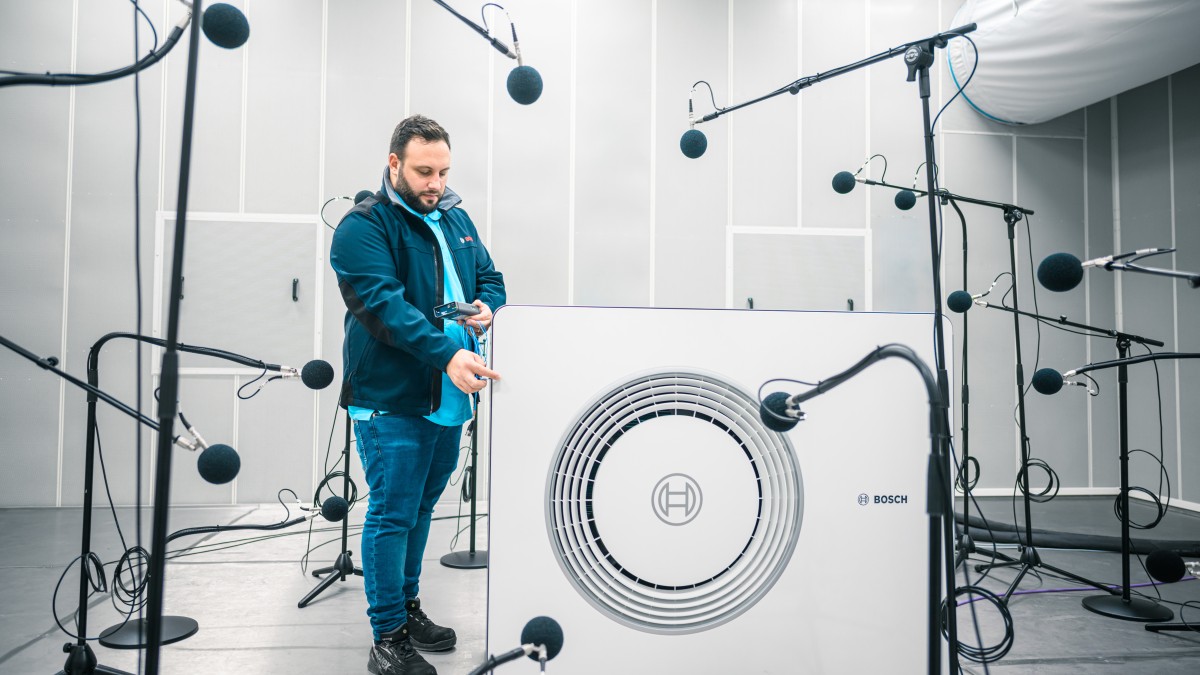
Particulary quiet heat pumps in the laboratory in Wernau